%20(1).webp)

Key takeaways
Calculate your complete purchase target, including the down payment, 2% to 5% in closing costs, and a post-purchase cash reserve buffer.
Keep funds needed within 3 years in the Everyday Shariah Account, an alternative to high-yield savings accounts.
Put medium-term savings on a three-plus year timeline to work in a 100% cash-funded real estate fund.
Apply rigorous due diligence criteria to any alternative home financing option well before making an offer on a property.
How to Save for a House as a Muslim
Buying a home has always been a great aspiration for many Muslims in the United States. While the process of doing so has always required a dedicated financial savings strategy, in recent times the math on that has changed. Over the last few decades, home prices have far outpaced income growth in the US, creating a frustrating predicament for aspiring homeowners. The standard playbook, which historically has included strategies like parking cash in a high-yield savings account and financing the rest with a conventional mortgage, hasn’t just become harder to follow. For many, it can actually feel as though it is off the table entirely.
However, the current economic conditions and general sentiment surrounding homeownership doesn’t automatically mean it is impossible. It just means it requires a different approach. For Muslims, this can look like developing a structured strategy that divides downpayment savings across different time horizons and utilizing Shariah-compliant financial vehicles to meet your ultimate goal. This guide walks you through exactly how to build that plan, from calculating your true savings target to knowing where each dollar should sit based on when you’ll actually need it.
U.S. Housing Affordability and the Challenge for Muslim Buyers
In 1985, the median US home price was $82,8001 while median annual household income was $23,6202, indicating a price-to-income ratio of roughly 3.5x. As of today, that ratio has climbed to 5.0x nationally. The median home price is now over $410,0001 compared to the median annual household income of around $83,1502.
Furthermore, in coastal metro areas like New York, New Jersey, California, and Washington D.C., that ratio is often closer to 8x to 12x annual income3. For reference, a 20% down payment on a $500,000 home now requires $100,000 in cash before closing fees even enter the picture.
That said, the growing housing affordability gap is not a problem of perception, but a well-documented trend over the last four decades. A buyer saving towards a median priced home today is forced to work against a ratio that’s grown roughly 40% relative to income since 1985, and buyers in coastal areas face an even more extreme pressure. This can understandably make homeownership feel completely out of the question, although this doesn’t have to be the case with the right strategy.
The default advice for how to buy a home in nearly every mainstream personal finance resource is generally the same: park savings in a high yield account and finance the purchase with a mortgage amortized over three decades. However, for Muslims, both pillars of this strategy are unavailable by default as they are not aligned with Islamic values. Interest-bearing accounts and interest-based debt are both built on Riba, which is strictly prohibited. This may appear to complicate things, but fortunately it does not make homeownership impossible for Muslims. Instead, it requires a different plan built from the ground up around compliant alternatives: how to grow savings without earning interest, and how to structure the purchase itself without borrowing at interest.
Why Just Saving in Cash Isn't Enough
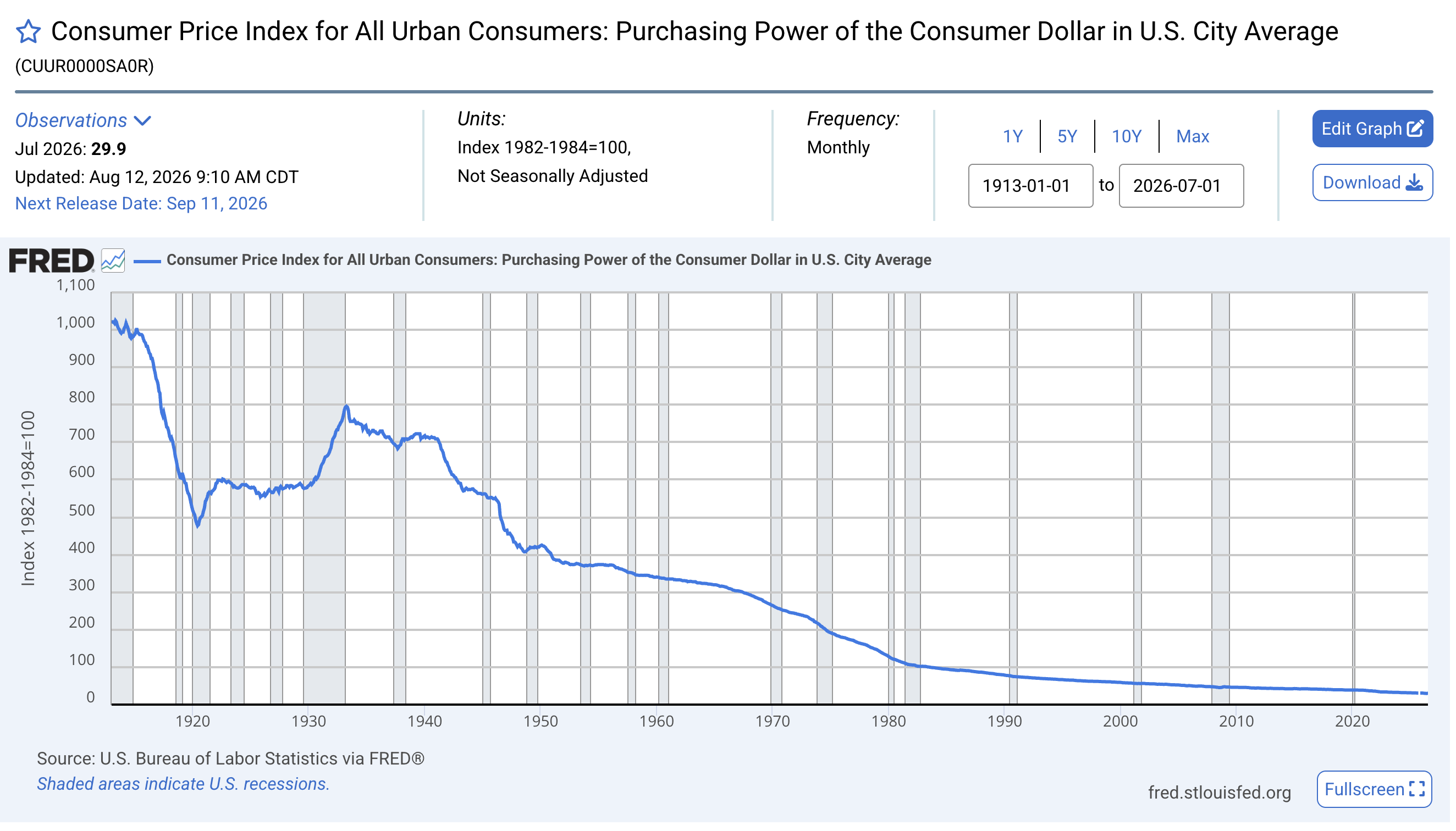
For many Muslims, the instinct to simply save in a regular checking or current account, rather than a high-yield savings account, feels like the safe, compliant choice. Avoiding interest is the right instinct. But holding a large sum of cash in a current account for years while saving for a home carries its own quiet cost: inflation.
Every year, the purchasing power of a dollar sitting still erodes. A down payment goal that seemed achievable when you started saving can become harder to reach over time, not because you're saving less, but because the cost of everything, including the home you're saving for, tends to rise faster than a cash balance can keep pace with.
This creates a real dilemma. General savings and investment options available in the broader market, high-yield accounts, CDs, money market funds, are largely built around generating a return through interest. For Muslims, none of those options are actually usable, which means avoiding interest can't simply mean "keep the money in cash and hope for the best." It requires understanding exactly why those mainstream options are off the table, and what compliant alternatives exist instead.
Why Conventional Options Are Off Limits for Muslims
The reason most conventional strategies to purchase a home (such as the aforementioned example) are prohibited for Muslims is because they are generally built on Riba. This includes stipulated interest or excess arising from a loan or debt, including conventional deposit and lending arrangements.
It is important to understand this definition as it clarifies why so many standard financial tools are unavailable to Muslim savers. Not because of the yield specifically, but because of how it is generated. The following is a list of the most conventional options Muslim savers should be aware of when saving for a home.
- High-yield savings accounts (HYSAs). The yield paid on your balance is interest, generated from the bank's lending activities.
- Certificates of Deposit (CDs). A guaranteed return in exchange for locking up your cash for a fixed term is, by definition, fixed interest.
- Money market accounts and funds. These generate yield from short-term interest-bearing debt instruments and corporate commercial paper.
- Treasury bills and government bonds. Returns here come directly from interest payments on government debt.
- Conventional mortgages and HELOCs. Borrowing cash and repaying the principal plus stipulated interest over 15 to 30 years is the clearest example of Riba in the home-buying process.
The common thread across these products is that the return arises through interest-bearing debt or deposit arrangements rather than a Shariah-permissible transaction or investment. For readers looking for permissible ways to generate income on savings instead, see our guide on halal real estate options in the U.S.
Calculate Your Downpayment Target and Timeline
Once you have decided you want to purchase a home, it is a good practice to determine how much you’re actually saving towards before deciding where to allocate said savings. The reason being is that many buyers underestimate their total target by focusing solely on the downpayment itself. There are additional fees and other financial considerations to be mindful of when it comes to homeownership.
That said, depending on your chosen financing structure, the downpayment itself is generally 5% to 20% of the total purchase price of a home. Once this is settled, the next financial requirement is closing costs. These include title insurance, legal documentation, escrow fees, appraisal fees, and transfer taxes. Generally speaking, these add another 2% to 5% of the property's value. Beyond the consideration of these two costs, it is also a smart strategy to build a post-purchase cash reserve. It is risky to deplete all of your liquidity at the closing table because it removes any cushion for what comes next. However, when you have established a 3 to 6 month buffer of emergency savings, after closing, you have room to cover moving expenses, immediate maintenance, and ongoing living costs. Consider this simple three-bucket framework to help organize savings across these needs and their different timelines:
Where to Keep Short-Term House Savings (Under 3 Years)
For any money that will be needed within 3 years, it is a good idea to prioritize capital preservation and accessibility over growth. Think of it less as a conservative preference, but more of a mathematical necessity given the timeline involved with homeownership.
When short-term house savings are placed in public stocks it introduces a real and unnecessary risk to a fixed deadline. Imagine a market correction of 15% to 20% happens right before your closing date and much of your downpayment savings are tied up in the market. This can put you in a difficult position where you are either forced to sell at a loss, or worst case, delay the purchase entirely. Regardless, either outcome can undermine the whole purpose of saving in the first place.
Down payment cash on a 1-to-3-year timeline needs to stay accessible, stable, and completely free of interest. This is exactly the purpose Wahed’s Everyday Shariah Account is built for. It is a dedicated, non-interest liquid vehicle designed to hold short-term house savings securely without exposing them to Riba or market volatility. For more on how the time horizon should shape where your money lives more broadly, see our guide on where Muslims should keep money they need within the next 12 months.
How to Invest Medium-Term House Savings (3+ Years)
While lower risk, liquid vehicles like the Everyday Shariah Account may protect short term capital, holding savings in liquid accounts for longer term carries its own risk: shifting goalposts. Over a multi year window, inflation and rising regional home prices can outpace basic returns, causing your down payment target to move further away even as you continue to save.
For a timeline extending multiple years, it may be a good idea to allocate a portion of your savings across different asset classes that combine growth with income generation. Physical real estate as an asset class historically helps outpace inflation over time while generating passive income through rental yield tied to tenant demand rather than interest rates or public stock market volatility.
The Wahed Real Estate Fund may be a good asset-backed option to consider for this 3+ year bucket:
- 100% Cash-funded. Properties are acquired entirely using cash equity without interest-bearing property financing.
- Automatic diversification: Provides instant exposure to a diversified portfolio of single-family residential homes across key U.S. markets.
- Professionally managed: Institutional management handles property sourcing, tenant vetting, leasing, and ongoing maintenance without landlord responsibilities.
- Potential rental income. Net rental distributions from actual tenants allow your capital to earn returns tied to real economic activity, not interest.
- Semi-annual liquidity windows. Operates on semi-annual liquidity windows rather than daily access. This structure is suited for multi-year horizons, not for short-term escrow or down payment storage, an important distinction to plan around.

For a deeper look at whether this asset class fits Islamic principles more broadly, see Is Real Estate Investing Halal in the U.S.?
Evaluating Alternative Home Financing Options Early
Once your down payment savings are on track, the next major decision is how you'll actually finance the purchase. This deserves research well before you're under pressure to make an offer. Waiting until you're mid-negotiation to evaluate financing options often leads to rushed decisions. Rather than relying on a product's marketing name to determine whether it's Shariah-compliant, evaluate any alternative home financing option against five (suggestive) criteria:
- Actual asset ownership or co-ownership. Confirm whether the provider genuinely acquires or holds the property as required by the structure, rather than simply issuing a debt loan under a different label.
- Ownership risk. Check whether ownership-related risks are borne by the relevant owner in accordance with the actual structure.
- Total lifetime outlay. Compare the full dollar amount paid across the entire term, not just the monthly payment, which can obscure the real cost.
- Legal contract provisions. Confirm that default terms don't impose compounding penalties or effectively convert into interest based debt.
- Independent Shariah board oversight. Verify ongoing auditing by recognized, independent Islamic finance scholars, not just a one-time compliance claim. The exact structure, documentation and implementation should be subject to appropriate Shariah review.
Wahed does not offer or endorse home-financing or mortgage products; our focus here is on Shariah-compliant saving and investing toward the goal of homeownership.
Building Your Home Savings Plan
Saving for a home without compromising on Riba is entirely achievable, it just requires a different structure than the conventional playbook offers. A two-vehicle strategy covers most of the journey: the Everyday Shariah Account for liquid capital you’ll need in the short-term, and the Wahed Real Estate Fund for savings with a longer runway. Matched correctly to your actual timeline, both halal and homeownership stop being competing goals.
Sources:
- Federal Reserve Bank of St. Louis: Median Sales Price of Houses Sold for the United States
- Visual Capitalist: American Income vs Home Prices
- Best Interest: Home Price Growth Outpaces Income in All Major U.S. Metros
Disclosure
This article is for educational and informational purposes only. It does not constitute financial, investment,legal, or religious advice. Wahed Financial, LLC ("Wahed"), as a manager of Wahed Real Estate Fund I LLC; Wahed Real Estate Series I, LLC (the “Wahed Issuer”), operates the wahed.com/real-estate website (the "Site") and is not a broker-dealer or investment advisor. All securities related activity is conducted through Dalmore Group LLC, a registered broker-dealer and member of FINRA/SIPC, located at 525 Green Place, Woodmere, NY 11598.
This investment is speculative, illiquid and involves substantial risk, including the possible loss of your entire investment. Securities are offered through Dalmore Group LLC, Member FINRA/SIPC. Wahed and Dalmore are not affiliates. Investors will be clients of Wahed. An offering statement has been filed with the SEC. SEC qualification does not imply approval or endorsement of the offering’s merits. Please review the full offering circular for complete terms and risks.
Investors are purchasing shares of a Fund and not the underlying asset(s) of the Fund. There is no assurance any Fund will achieve its objectives, is not listed on an exchange and may not be suitable for all investors. Distributions are subject to and are not guaranteed.
The Everyday Shariah Account is a WRAP investment account managed by Wahed Invest LLC. Wahed Invest LLC is a U.S. Securities and Exchange Commission (SEC) registered investment advisor. This content is for informational purposes only and does not constitute investment advice or a recommendation to buy or sell any securities. All investments have market risk, including loss of principal. Past performance does not guarantee future result and there is no assurance any investment strategy will achieve its objectives or is suitable for all investors. The term halal denotes that permissibility in accordance with Islamic law.
Frequently asked questions
Yes. It requires segmenting your capital into liquid, non-interest accounts for near-term needs and asset-backed investment vehicles for longer horizons, rather than relying on a single conventional savings tool.
Funds you'll need within 3 years should stay in the Everyday Shariah Account to protect against market drawdowns right before your purchase. Funds on a longer, three-plus year timeline can be allocated to asset-backed real estate investments to help combat inflation over that window.
No. A real estate fund is an investment product designed for long-term asset growth and potential rental income, not a liquid account you can draw from for closing funds on short notice.
Allocating your medium-term capital into cash-funded estate investments allows part of your savings to maintain exposure to property market trends while you continue saving, rather than falling further behind purely in cash.