

Key takeaways
Traditional savings accounts can remain useful for liquidity and short-term needs.
Inflation may reduce the purchasing power of cash over time.
Large cash balances should be reviewed against your goals and obligations.
Conventional interest-bearing savings accounts raise Shariah considerations for Muslim savers.
Review liquidity, fees, risks, and protections before changing products.
Shariah-compliant cash management products aren't necessarily equivalent to insured bank deposits.
Long-term investment goals may call for a different strategy than emergency savings.
You've been saving consistently, and the balance in your bank account has grown. But as your finances evolve, you may start questioning whether a traditional savings account is still the right place for all of that money. Is your cash keeping pace with inflation? Does the account align with your Islamic financial principles? And could some of your savings serve your financial goals differently?
Traditional savings accounts can still serve an important purpose by keeping money accessible for emergencies and short-term needs. However, inflation, interest-based returns, changing financial goals, or account limitations may be reasons to explore alternatives to traditional savings accounts. The right approach isn't necessarily to move all your money somewhere else. It's to understand what each portion of your savings needs to accomplish and whether your current accounts still support those needs. Before exploring the signs that your savings strategy may need to change, it helps to understand what a traditional savings account is designed to do and where its limitations begin.
What is a Traditional Savings Account and What is it Designed For?
Traditional savings accounts are designed primarily to keep cash accessible while separating it from everyday spending. They serve an important cash management purpose, but they may not be appropriate for all the money you're holding.
How Traditional Savings Accounts Work: You deposit money with a financial institution and can generally access it subject to the account's terms. Depending on the account, your balance may earn interest, incur fees, or have withdrawal conditions, while eligible deposits at FDIC-insured banks also receive federal deposit insurance up to applicable limits.
Why People Use Savings Accounts: Savings accounts can be useful for emergency funds, short-term goals, and other money that needs to remain accessible and separate from everyday spending.
What Savings Accounts Aren't Designed to Do: Savings accounts aren't designed for every long-term financial objective. Inflation, limited growth potential, and conventional interest-based returns are among the disadvantages of savings accounts to consider as your goals evolve.
As your savings grow and your financial priorities change, the role of your savings account may need to change with them. Here are five signs it may be time to reassess whether your current savings strategy still meets your needs.
Sign #1: Your Savings Aren’t Keeping Pace With Inflation
Inflation can reduce the purchasing power of your savings when prices rise faster than your money grows. Your account balance may stay the same or even increase, but that money may buy less over time.
What Inflation Means for Your Savings: Inflation is an increase in the cost of goods and services over time. If your savings don't grow at a similar rate, the same amount of money will cover fewer expenses in the future.
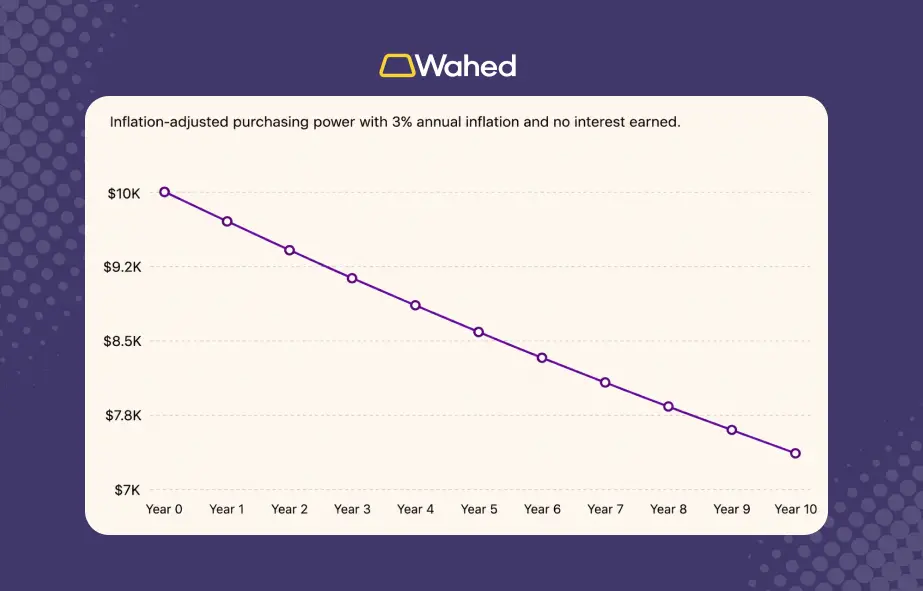
Understanding Real Returns: Your nominal return is what your savings earn before accounting for inflation, while your real return reflects inflation's effect on purchasing power. For example, if your savings earn 1% while inflation is 3%, your balance may grow, but its purchasing power still declines.
Why Purchasing Power Matters: Losing purchasing power can make it harder for your savings to cover future household expenses, housing, education, and other financial goals. The longer cash grows more slowly than inflation, the greater the potential effect.
Does This Mean You Should Stop Holding Cash?: No. Cash still provides important liquidity for emergencies and short-term expenses. Whether you should keep cash or invest it depends on when you'll need the money and what purpose it serves.
For example, if $10,000 earns no return while inflation averages 3% annually, its purchasing power would steadily decline even though the account balance remains unchanged.
Sign #2: You’re Holding More Cash Than Your Financial Goals Require
Holding a large cash balance isn't inherently a problem, but your cash should have a clear purpose. Money beyond your emergency and short-term needs may be worth evaluating against your longer-term goals.
How Much Cash Should You Keep Accessible?: Keep enough to cover emergencies and known short-term obligations. How much cash you should keep before investing depends on your essential expenses, income stability, and upcoming financial needs.
Separate Emergency Savings From Long-Term Investment Money: Emergency reserves prioritize accessibility, while short-term savings and planned purchases depend on when you'll need the money. Funds for long-term goals may have more time to tolerate investment risk.
Why Holding Excess Cash May Have Tradeoffs: Cash provides liquidity, but excess balances can lose purchasing power to inflation and miss potential long-term investment growth.
When Larger Cash Reserves May Still Make Sense: More cash may be appropriate if you have variable income, own a business, expect a major expense, support family members, or face employment uncertainty.
Knowing your essential expenses helps here. Wahed's Expense Tracker can help you review your spending and estimate how much cash you need to keep accessible.
Sign #3: You Want Your Savings to Align with Islamic Financial Principles
If your savings earn conventional interest, you may want an alternative that avoids riba. Shariah compliance depends on how a product is structured and generates returns.
Why Conventional Interest Raises Shariah Concerns: Conventional interest is considered riba and prohibited under mainstream Islamic finance interpretations. This can make interest-bearing accounts problematic for Muslims seeking halal savings alternatives.
Are All Cash Management Products Structured the Same Way?: No. Bank deposits, investment accounts, and cash management products can generate returns through different structures. A product's underlying mechanism matters when evaluating Shariah compliance.
What Should You Look for in a Shariah-Compliant Alternative?: Review its financial structure, Shariah oversight, return mechanism, fees, liquidity, principal risk, and disclosures. Muslims can earn halal returns on cash through permissible structures rather than conventional interest.
Understanding Wahed's Everyday Shariah Account: Wahed's Everyday Shariah Account (ESA) is a Shariah-compliant investment account designed for short-term cash management. It is not a conventional bank savings account, returns aren't guaranteed, and principal can fluctuate.

Sign #4: Your Current Account Doesn’t Fit How You Need to Access Your Money
Your savings account should provide the level of access you need for the money's intended purpose. This is especially important for emergency and short-term savings.
Understanding Liquidity: Liquidity refers to how easily and quickly you can access your money. Funds needed soon generally require greater liquidity than money intended for long-term goals.
Reviewing Account Restrictions: Check transfer times, withdrawal conditions, transaction limits, minimum balances, and fees. These terms can affect how quickly and easily you can use your savings.
Why Emergency Savings Need Special Consideration: Emergency funds prioritize accessibility and reliability. Money you may need unexpectedly should be evaluated differently from long-term investments that can fluctuate in value or take longer to access.
Comparing Account Features: Don't assume every savings or cash management product provides equivalent access. Bank accounts and investment-based products can differ in liquidity, principal risk, protections, and withdrawal mechanics. When planning near-term expenses, review where to keep money you'll need within the next 12 months based on those needs.
Sign #5: Your Savings Strategy Hasn’t Evolved With Your Financial Goals
Your savings strategy should evolve alongside your income, responsibilities, and financial goals. Certain milestones may signal that it's time to reassess how much you keep in cash and how much you allocate toward longer-term goals:
Your Income Has Increased: Higher income may give you room to reassess how much you save and invest. After a salary increase, review whether you should increase your investments after a raise alongside other financial priorities.
Your Family Responsibilities Have Changed: Marriage, children, education costs, or supporting dependents can change how much accessible cash your household needs.
Your Financial Goals Have Become More Long-Term: Retirement, education planning, wealth accumulation, and other major milestones may require a different strategy from short-term saving. Periodically review whether you're saving enough for your goals as those priorities evolve.
You're Ready to Evaluate Investing Separately From Saving: Cash reserves prioritize accessibility, while long-term investments accept greater risk in pursuit of potential growth. If you prefer a managed approach, Wahed's Robo Advisor offers Shariah-compliant portfolios for longer-term investment goals.
You Haven't Reviewed Your Accounts in Years: Periodically review account fees, terms, financial needs, and goals to make sure your savings strategy still fits your circumstances.
What Are the Alternatives to Traditional Savings Accounts?
Alternatives to traditional savings accounts include high-yield savings accounts, non-interest-bearing accounts, Shariah-compliant cash management products, and investment portfolios. These options serve different purposes and shouldn't be treated as interchangeable.
- Conventional High-Yield Savings Accounts: These typically offer higher interest rates than traditional savings accounts but raise the same Shariah concerns around riba. Comparing high-yield savings vs Everyday Shariah Account also illustrates how interest-bearing accounts differ from Shariah-compliant alternatives.
- Non-Interest-Bearing Bank Accounts: These may provide a place to hold accessible cash without earning interest, subject to the account's fees and terms.
- Shariah-Compliant Cash Management Products: These may use different financial structures and have their own risks, fees, liquidity terms, and protections.
- Shariah-Compliant Investment Portfolios: These may suit longer-term goals but aren't necessarily substitutes for accessible emergency cash.
Traditional Savings Account vs Wahed ESA: What Should You Compare?
A traditional savings account and Wahed ESA can both play a role in cash management, but they differ in structure, returns, risk, protections, and access to funds. These differences matter more than simply comparing potential returns.
Neither option should be evaluated on returns alone. Financial structure, liquidity, principal risk, protections, fees, and the purpose of your savings should all factor into the decision.

Should You Move All Your Savings Into One Alternative Account?
Not necessarily. The goal isn't to replace every account with one product, but to choose financial arrangements that fit what different portions of your money need to accomplish.
- Everyday Spending: Money for routine expenses should be readily available for regular transactions.
- Emergency Savings: Emergency funds prioritize reliable access when unexpected expenses arise.
- Short-Term Financial Goals: Money for planned expenses should be kept somewhere appropriate for when you'll need it and the level of risk you can accept.
- Long-Term Investments: Money you won't need for years may be able to tolerate greater investment risk in pursuit of long-term growth.
Common Mistakes to Avoid When Evaluating Savings Alternatives
- Chasing higher returns without understanding risk
- Assuming all cash management products are bank accounts
- Ignoring withdrawal restrictions
- Overlooking deposit insurance differences
- Investing emergency savings without considering liquidity
- Confusing Shariah compliance with guaranteed principal protection
- Moving all savings without reviewing financial obligations
- Comparing products based only on advertised returns
- Failing to review fees and product disclosures
Explore Savings Options That Reflect Your Financial Priorities
Your savings strategy should support both your financial preparedness today and your goals for the future. That means balancing liquidity for emergencies and short-term needs with long-term planning, while choosing financial products that align with your Islamic values.
If your traditional savings account no longer meets those needs, compare alternatives based on their structure, accessibility, risks, protections, and fees. Explore Wahed's Everyday Shariah Account to learn how it works and determine whether its features fit your financial plan.
Frequently asked questions
It can be useful for accessible savings and short-term needs. Whether it remains appropriate depends on its terms, features, and your objectives.
Potential limitations include limited growth potential, inflation risk, fees, account restrictions, and Shariah concerns related to conventional interest.
Options may include non-interest-bearing bank accounts, other bank savings products, Shariah-compliant cash management products, or investments for appropriate longer-term goals.
Conventional interest-bearing accounts raise riba-related concerns under mainstream Islamic finance interpretations. Individual circumstances and account structures may call for further scholarly guidance.
Certain Islamic financial arrangements may generate returns through structures other than conventional interest, subject to their contractual terms and Shariah review.
Don't assume so. ESA's legal structure, risks, liquidity, and protections should be evaluated using its current official disclosures.
Emergency funds generally prioritize accessibility and capital preservation. Investment accounts may expose funds to market losses or liquidity restrictions.
Disclaimer:
Wahed Invest LLC (Wahed) is a U.S. Securities and Exchange Commission (SEC) registered investment advisor. Wahed Invest provides brokerage services to its clients through its brokerage partner Apex Clearing Corporation, a member of NYSE - FINRA - SIPC and regulated by the SEC and the Commodity Futures Trading Commission. Registration does not imply a certain level of skill or training. Wahed does not intend to offer or solicit anyone to buy or sell securities in jurisdictions where Wahed is not registered or a region where an investment practice like this would be contrary to the laws or regulations. Any returns generated in the past do not guarantee future returns. All securities involve some risk and may result in loss. Any performance displayed in the advertisements or graphics on this site are for illustrative performances only.
The Everyday Shariah Account (ESA) is a WRAP investment account managed by Wahed Invest LLC. Investments and accounts are not FDIC insured, Not insured by any Federal Government Agency and not a deposit of a Bank. The term halal denotes that permissibility in accordance with Islamic law.