Key takeaways
Three to six months of essential expenses is a common starting point for an emergency fund.
Your appropriate cash reserve depends on your income stability, financial obligations, household needs, and upcoming expenses.
Emergency savings and short-term goal savings serve different purposes from long-term investments.
Too little cash can create liquidity problems, while excess cash may involve inflation and opportunity-cost tradeoffs.
Muslim investors should evaluate cash management products for both Shariah compliance and financial risks.
Financial readiness to invest depends on your broader financial picture, not one universal savings number.
You've been saving consistently and finally have a meaningful balance in your bank account. Now you're wondering whether to start investing. But there's another question: what if an unexpected expense comes up after you've invested your savings? For Muslim professionals and families, the decision can feel even more complicated because many also want to avoid conventional interest-bearing financial products.
So, how much cash should you keep before investing? Many financial planning guidelines suggest keeping roughly three to six months of essential expenses in an emergency fund before committing substantial money to long-term investments. The right amount depends on your obligations, income stability, and near-term goals. Some people reasonably keep larger reserves, while others begin modest investing while still building their emergency savings. Cash and investments serve different purposes, and this guide can help you determine how much of each may make sense for your circumstances.
Accessible cash can help protect you from unexpected expenses and from having to sell investments at an unfavorable time. For reference, in 2025, 59% of U.S. adults reported at least one major unexpected expense.¹ That said, cash reserves aren't meant to maximize returns. Their primary purpose is to provide liquidity when you need it, which can support your finances in several ways:
- Unexpected emergencies: Medical expenses, home or car repairs, temporary loss of income, or family emergencies can create unexpected financial pressure.
- Avoiding forced sales: With cash on hand, you're less likely to need to sell investments during a market downturn to cover an unexpected expense.
- Short-term obligations: Upcoming expenses should be planned separately from long-term investments. Consider where to keep money you'll need within the next 12 months when planning for near-term expenses.
- Financial flexibility: Liquidity can help you manage changing expenses or circumstances without disrupting your long-term financial plan.
How Much Cash Should You Have Before Investing?
Three to six months of essential expenses is a common starting point, but not a universal rule. The right amount depends on your income stability, household responsibilities, upcoming expenses, and access to other financial resources.
- Three months of essential expenses: A smaller reserve may be worth considering if you have relatively stable income, predictable household expenses, fewer financial dependents, and other accessible financial resources.
- Six months of essential expenses: A larger reserve may make sense if you support dependents, have variable expenses, face greater income uncertainty, or have limited alternative financial resources.
- More than six months: Additional cash may be appropriate if you're self-employed, have seasonal or variable income, face uncertain employment, have significant household obligations, or expect major near-term expenses.
These ranges are guidelines, not requirements. Your cash reserve should reflect your actual financial circumstances rather than a universal savings target.
How Do You Calculate Your Emergency Fund?
You can estimate your designated emergency savings by calculating your essential monthly expenses and multiplying that amount by the number of months you want your cash reserve to cover.
Step 1: Identify Essential Monthly Expenses
Start with the expenses your household would still need to pay during a financial emergency. These may include:
- Housing
- Groceries
- Utilities
- Transportation
- Insurance
- Healthcare
- Childcare
- Required debt payments
- Other necessary household obligations
Reviewing where your money goes every month can help separate essential expenses from discretionary spending before setting your emergency fund target.
Step 2: Calculate Your Monthly Essentials
For example, consider a U.S. household with the following monthly expenses:
Step 3: Estimate Different Emergency Fund Targets
Considering $4,500 in monthly essentials, a three-month emergency fund would equal $13,500, while six months would equal $27,000. That said, these figures aren't universal targets. They show how the size of an emergency fund changes based on both monthly expenses and the amount of time you want your reserve to cover. Use Wahed's expense tracker.
What Counts As Cash Savings?
Cash savings generally include funds that are stable, liquid, and readily accessible when you need them. Determining whether you're saving enough for your goals also means considering which accounts and products are appropriate for different liquidity needs.
Checking Account Balances: Checking accounts are typically used for regular spending, bills, and immediate expenses. Consider keeping enough accessible to comfortably cover your routine obligations.
Savings Accounts: Savings accounts can keep cash separate while remaining accessible. Compare withdrawal conditions, fees, and applicable deposit protections. Conventional savings accounts may also pay interest, which can raise riba considerations.
Shariah-Compliant Cash Management Products: These products can vary significantly in structure. Consider their liquidity, risk, fees, Shariah oversight, and applicable protections. Cash management products are not necessarily bank deposits and may not offer principal protection, deposit insurance, or immediate withdrawals.
What About Stocks, ETFs, and Real Estate?: Investments generally shouldn't be treated as emergency cash. Stocks and ETFs can decline in value, while assets such as real estate may take time to sell, making them less reliable for immediate financial needs.

Should You Keep Emergency Savings Separate From Investment Money?
Yes. Separating cash by purpose can make it easier to determine what needs to remain accessible and what can reasonably be invested for longer-term goals.
Emergency Savings: This money is reserved for unexpected expenses, such as urgent repairs, medical costs, or a temporary loss of income.
Short-Term Goal Savings: Known expenses such as a home down payment, tuition, travel, or major family purchases should generally be planned separately from emergency savings. The timing of the expense can help determine how accessible and stable the money needs to be.
Long-Term Investment Funds: Money allocated toward longer-term goals may have more time to tolerate market fluctuations and investment risk.
Should You Finish Building an Emergency Fund Before Investing?
Not necessarily. Saving and investing can sometimes happen simultaneously, depending on your financial circumstances.
When Prioritizing Cash Savings May Make Sense: Focus on building accessible savings if you have little set aside, unstable income, significant upcoming expenses, or obligations that could be disrupted by investment losses.
When Saving and Investing Simultaneously May Be Worth Considering: Stable cash flow, existing emergency savings, employer retirement benefits, and room for affordable recurring contributions may give you more flexibility to pursue both. Knowing how much money you need to start investing can help you decide whether smaller contributions fit alongside your savings goals.
Why There Isn't One Rule for Everyone: Your income, expenses, responsibilities, and long-term goals all influence the balance. Three or six months of expenses can provide useful benchmarks, but you don't necessarily need to reach either before investing any amount.
Can You Keep Too Much Cash Instead of Investing?
Yes. Holding more cash than you need can come with tradeoffs, including inflation and missed opportunities for long-term growth.
Inflation and Purchasing Power: As prices rise over time, the same amount of cash may buy less. For example, if you hold excess cash today and start investing 10 years later, that cash may have lost purchasing power while also missing a decade of potential investment growth.
Long-Term Investment Growth Potential: Investments can provide opportunities for capital appreciation and reinvested returns over time, although returns are not guaranteed and losses are possible.
The Tradeoff Between Liquidity and Growth: Cash prioritizes stability and access, while investing accepts greater risk in pursuit of potential growth. Deciding whether to keep cash or invest it depends largely on when you expect to need the money.
When Large Cash Reserves May Still Be Appropriate: Keeping additional cash may make sense when you have major near-term expenses, uncertain income, significant financial obligations, or a lower capacity to absorb investment losses.
Where Can Muslims Keep Their Emergency Savings?
Muslims can keep emergency savings in accessible accounts or cash management products that avoid riba and align with Shariah principles. The options differ in how they generate returns, protect funds, and provide access to your money.
Why Conventional Savings Accounts Raise Shariah Questions: Conventional savings accounts typically earn interest, which is considered riba and prohibited in Islam. This doesn't mean Muslims cannot earn halal returns on their cash. Shariah-compliant alternatives can generate returns through permissible structures rather than conventional interest.
What Should Muslims Look for in a Cash Management Product?: Consider the product's Shariah structure, accessibility, fees, principal risk, withdrawal conditions, regulatory protections, and disclosures. Cash management products should not automatically be assumed to provide the same liquidity or protections as bank deposits.
Understanding Wahed's Everyday Shariah Account: Wahed's Everyday Shariah Account (ESA) is a Shariah-compliant investment account designed for short-term cash management. Funds are invested in Shariah-compliant assets through an arbitrage strategy rather than loaned for interest. ESA has no wrap fee, although its underlying fund has a 0.51% annual expense ratio, and withdrawals typically take two to three business days. Unlike a High Yield Savings Account, Wahed's Everyday Shariah Account is an investment product, so principal can fluctuate and it is not a conventional insured bank savings account.
How Much Cash Should You Keep If You Have a Family?
Families may benefit from keeping a larger cash reserve because more people depend on the household's finances. When setting your target, consider these factors:
- Household dependents: Supporting children or other family members increases the expenses your emergency savings may need to cover.
- Childcare and healthcare: These costs can be recurring, unpredictable, and difficult to reduce quickly during a financial emergency. Among parents who used paid childcare, more than half spent at least half as much on childcare as they did on housing, according to Federal Reserve data.²
- Single vs. dual income: A household relying on one income may need a larger cushion than one with two stable income sources.
- Major family goals: Homeownership, education, and other planned expenses should have dedicated savings rather than relying on your emergency fund.
How Much Cash Should You Keep If You’re Self-Employed?
Self-employed workers may benefit from keeping a larger cash reserve because their income can be less predictable. Your target should reflect the reliability of your income and the timing of your financial obligations. Consider:
- Variable income: Freelancers and business owners may experience fluctuations in monthly income, making additional cash useful during slower periods.
- Business and personal cash reserves: Business operating funds and personal emergency savings serve different purposes and should generally be planned separately.
- Tax obligations: Money set aside for anticipated tax payments shouldn't be treated as available emergency savings or investment capital.
- Seasonal or irregular expenses: Predictable costs that don't occur every month should be planned for separately so they don't unexpectedly reduce your cash reserve.
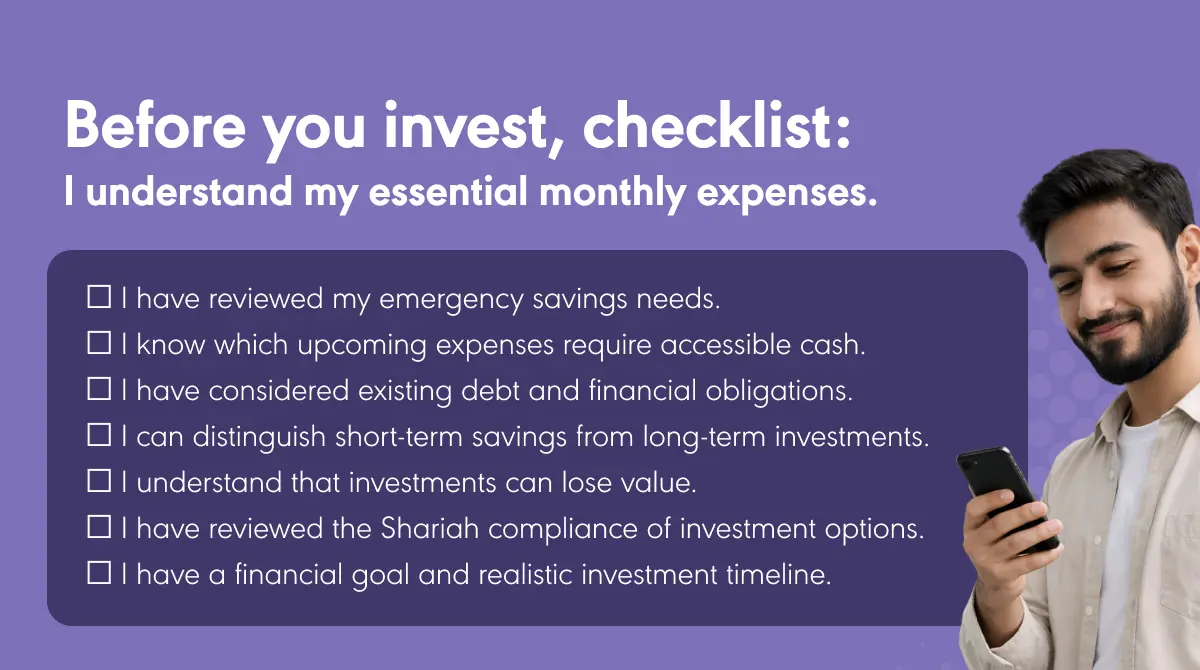
How Do You Know When You’re Financially Ready to Invest?
Before investing, review whether your current finances can support both your short-term needs and long-term goals. The following checklist can help you assess the key areas to consider.
What Should You Do With Cash Beyond Your Emergency Fund?
Cash you don't need for emergencies or near-term expenses may be put toward longer-term goals, including retirement and investing. Before deciding where that money goes, review:
Upcoming Financial Goals: Identify whether you'll need the money soon for a home purchase, education, travel, or another planned expense before exposing it to investment risk.
Retirement Savings: Determine whether additional retirement contributions fit your goals, including contributions to eligible workplace or individual retirement accounts.
Shariah-Compliant Investment Options: Depending on your goals, options may include Shariah-compliant stocks, ETFs, managed portfolios, and other suitable investments.
Diversification and Risk: Choose investments based on your timeline, goals, and risk tolerance rather than focusing solely on potential returns.
Managed Halal Investing: If you prefer a managed approach, Wahed's Robo Advisor offers diversified, Shariah-compliant portfolios designed around different investment goals and risk profiles.
Common Mistakes to Avoid
- Investing money needed for emergencies: Market losses could leave you short when you need the funds.
- Assuming every household needs the same cash balance: Your reserve should reflect your expenses, income stability, and responsibilities.
- Keeping all savings in a checking account: Review whether other suitable cash management options better serve different savings goals.
- Ignoring inflation: Cash can lose purchasing power over time.
- Treating investments as emergency savings: Investments can fluctuate and may need to be sold at an unfavorable time.
- Confusing investment products with insured bank deposits: Cash management investments may have different risks, protections, and withdrawal terms.
- Forgetting short-term obligations: Keep money needed for upcoming expenses separate from long-term investments.
- Waiting for a perfect savings balance: You don't necessarily need to reach a specific cash target before considering any investment.
- Ignoring Shariah compliance: Review how a cash or investment product is structured rather than relying on its name or marketing.
Build Your Cash Reserve and Investment Plan Around Your Goals
The right balance between cash and investing depends on your expenses, income stability, short-term needs, and long-term goals. Maintaining accessible emergency savings can provide financial flexibility, while money you won't need soon may be better positioned for longer-term opportunities. For Muslim households, that planning also means evaluating how both cash and investments align with Shariah principles.
Whether you're building emergency savings or evaluating your next investment, Wahed offers financial tools and Shariah-compliant products to explore as part of your financial plan.
Sources:
- The Federal Reserve: Report on the Economic Wellbeing of U.S. Households in 2025
- The Federal Reserve: Report on the Economic Wellbeing of U.S. Households in 2024
Frequently asked questions
A common starting guideline is three to six months of essential expenses, plus cash for known short-term obligations. Individual needs vary.
It depends on your monthly essential expenses, household responsibilities, income stability, and upcoming financial needs.
Six months is a commonly used guideline, but it isn't a universal requirement.
Some people choose to save and invest at the same time, depending on cash flow, obligations, and risk capacity.
Enough to manage expected transactions and maintain a buffer for upcoming bills, based on your circumstances.
Substantial cash may reduce long-term growth opportunities and expose purchasing power to inflation, although liquidity can be valuable.
Muslim savers may evaluate accessible products based on Shariah compliance, liquidity, risk, fees, and applicable protections.
Disclaimer:
Wahed Invest LLC (Wahed) is a U.S. Securities and Exchange Commission (SEC) registered investment advisor. Wahed Invest provides brokerage services to its clients through its brokerage partner Apex Clearing Corporation, a member of NYSE - FINRA - SIPC and regulated by the SEC and the Commodity Futures Trading Commission. Registration does not imply a certain level of skill or training. Wahed does not intend to offer or solicit anyone to buy or sell securities in jurisdictions where Wahed is not registered or a region where an investment practice like this would be contrary to the laws or regulations. Any returns generated in the past do not guarantee future returns. All securities involve some risk and may result in loss. Any performance displayed in the advertisements or graphics on this site are for illustrative performances only.