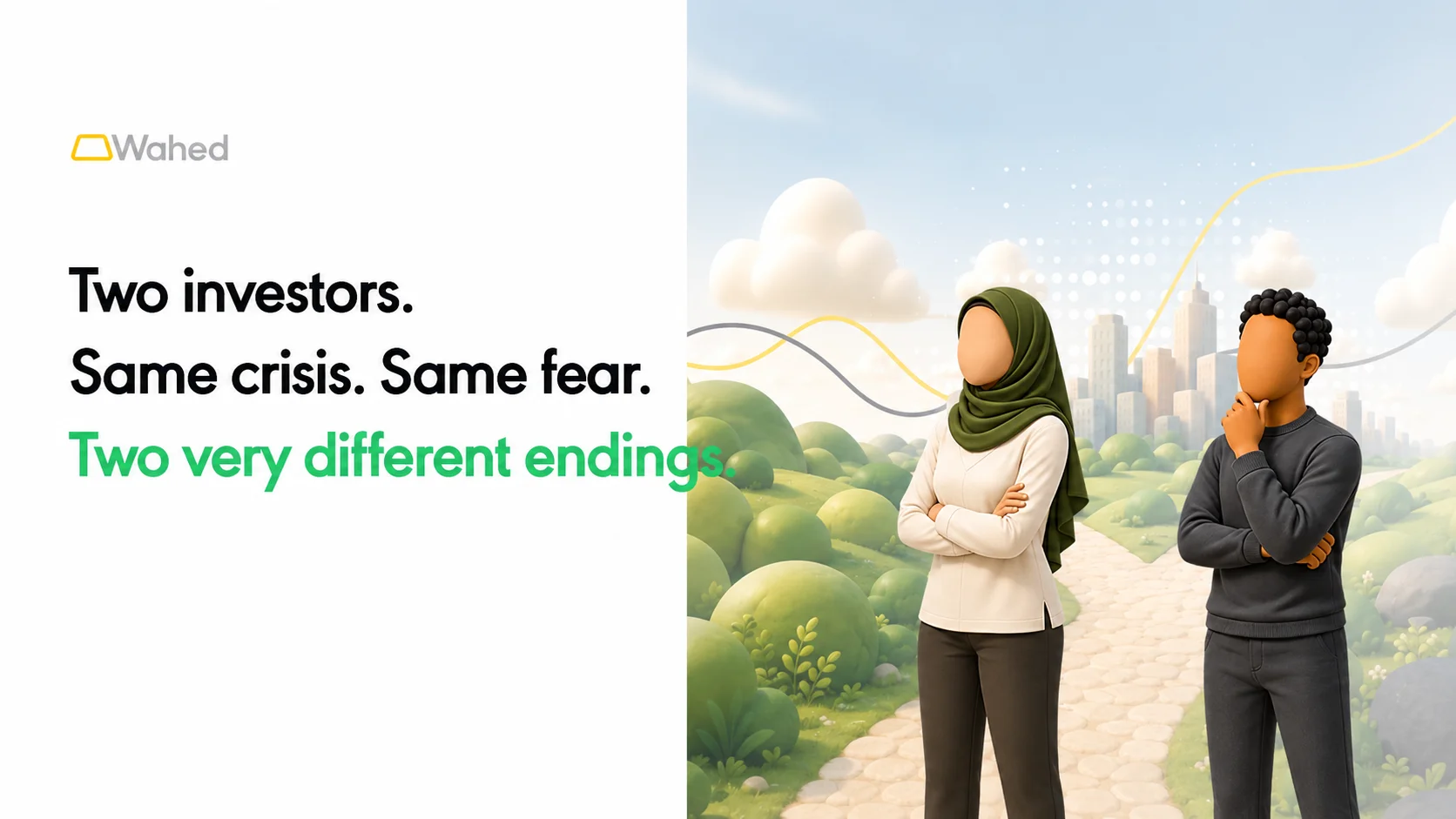
The first quarter of 2025 showed just how quickly markets can shift beneath your feet. When the United States announced sweeping tariff measures in April, the ripple effects reached Malaysia almost immediately. The ringgit weakened against the US dollar as global currency markets reacted defensively to the tariff shock, and the FBM KLCI fell to a year-low of 1,400.59 on 9 April 2025, directly triggered by the initial US tariff announcement. Watching your hard-earned money move in ways that feel completely outside your control is more than a headline. It is a visceral reminder of how exposed we all are to forces far beyond our borders.
So how do we stay on steady ground while still pursuing meaningful, Shariah-compliant growth? The first step is understanding the distinct roles that saving and investing each play in a balanced halal financial plan.
Savings vs. Investing: Two Essential Financial Tools
Given how unpredictable markets can be, not all of your money should be exposed to their swings. This is where two fundamental approaches come in: saving and investing. Both are essential, but they serve very different purposes, especially within Islamic finance.
Savings accounts (or their Shariah-compliant alternatives) are primarily for capital preservation, liquidity, and short-term goals. They are generally low-risk. Think of a savings vehicle as a secure place for money you might need soon, or money that needs to be shielded from market volatility. Crucially for Muslims, these savings must not earn interest (riba).
Investment accounts aim for long-term growth and wealth accumulation. They carry more risk than savings, with the potential for higher returns over time. Halal investing is like planting a seed for long-term growth. It requires patience, and an understanding that growth rates will vary from year to year.
Savings Accounts: Your Foundation for Financial Security
A savings account focuses on capital preservation, liquidity, and stability. The main goal is security and accessibility, not significant growth.
Money that belongs here includes your emergency fund covering three to six months of essential living expenses, short-term goals such as a car purchase or Umrah within the next one to two years, and major upcoming purchases like a wedding or home down payment within a short timeframe. These funds need quick access and stable capital value, shielded from market risks.
Here is the challenge for Malaysian Muslims: most conventional savings accounts are built on interest-bearing structures, and riba is clearly prohibited in Islam. Why does this matter so deeply? Because riba often shifts wealth without real effort or risk, creating imbalance and encouraging a debt-driven economy rather than productive, meaningful work.
The good news is that Malaysia, ranked first in the ICD-LSEG Islamic Financial Development Indicator for eleven consecutive years, is one of the most developed Islamic finance markets in the world. Bank Negara Malaysia (BNM) has built a comprehensive Islamic financial system that operates in parallel with the conventional system, enshrined in legislation since the Islamic Banking Act 1983. Halal savings options are not niche products here. They exist across major banks, and they are regulated.
The most common Shariah-compliant savings structures in Malaysia include:
- Mudarabah accounts — you provide the capital and the bank invests it in Shariah-compliant activities, sharing the resulting profit with you.
- Wadiah accounts — the bank safeguards your funds and may offer a hibah (gift) at its discretion, with no contractual interest promised.
Both structures ensure your money works without touching riba. However, even within this framework, not every product labelled "Islamic" is straightforward. Reading the fine print still matters. The Shariah compliance of a product depends on its underlying contract, its revenue sources, and the oversight of a credible Shariah advisory body.
Investment Accounts: Your Vehicle for Long-Term Growth
While savings accounts offer stability, achieving significant long-term financial goals — buying a home, funding your children's education, retiring with dignity — generally requires investment accounts that grow your wealth over time in a manner pleasing to Allah (SWT).
Halal investing means purchasing assets with an expected return, strictly through Shariah-compliant instruments. In Malaysia, the investment landscape for Muslim investors is genuinely well-developed. Options include:
Shariah-screened equities and unit trust funds. The Securities Commission Malaysia (SC) publishes a list of Shariah-compliant securities, first introduced in 1997 and updated twice a year in May and November. Funds investing in these securities are vetted to ensure they avoid prohibited income sources such as alcohol, gambling, conventional financial services, and pork-related activities, while also meeting financial ratio requirements.
Sukuk (Islamic bonds), which represent ownership in tangible assets and generate returns from profits rather than interest. Malaysia holds approximately 43% of the global sukuk market, making it the largest sukuk market in the world. For local investors, this is an asset class where Malaysia genuinely leads the world.
Gold, a Shariah-permissible asset class under AAOIFI Shari'ah Standard No. 57, developed in consultation with leading scholars and endorsed by the AAOIFI Shari'ah Board, with consultations conducted in partnership with Bank Negara Malaysia. Gold has historically served as a store of value and a hedge against inflation and currency depreciation — both relevant concerns for investors watching the ringgit.
Real estate, whether through direct ownership or Shariah-compliant fractional property platforms, provided the financing structure and revenue streams are free of prohibited elements.
Unlike conventional investments built on riba, halal investing stays rooted in real assets and ethical business activity. But let us be honest: investing does come with more ups and downs than saving. That is not a flaw. It is simply the nature of markets. Prices move. Some days you are up, some days you are down. When you zoom out, however, the long-term picture tells a very different story.
That kind of long-term compounding is what makes investing such a powerful tool, especially when guided by Shariah principles and sound diversification. So yes, volatility might shake you in the short run. But when approached with faith, patience, and the right strategy, investing becomes a clear path toward sustainable, halal wealth-building.
Aligning Your Finances: Matching Accounts to Life's Milestones
Now that we have unpacked what savings and investment accounts are, the next question is: how do you decide which one fits your financial goals? The good news is it does not have to be complicated.
At Wahed, we always recommend keeping things clear and purposeful. Start by focusing on three key factors: your goal, your time horizon, and how much risk you are comfortable with. Here is a simple decision matrix covering some of life's major milestones:
| Goal | Time Horizon | Risk Tolerance | Best Fit | Islamic Finance Rationale |
|---|---|---|---|---|
| Emergency Fund | Immediate / Ongoing | Very Low | Halal Savings Account | Capital preservation, liquidity, riba-free. Essential for unforeseen needs. |
| Buying a Car | 1 Year | Low | Halal Savings Account | Short timeline means avoiding market risk. |
| Down Payment for a Home | 5 to 7 Years | Moderate | Halal Investment Account | Longer timeline allows for potential growth to outpace inflation. |
| Children's Education | 15 Years | Moderate to High | Halal Investment Account | Very long timeline; focus on growth through Shariah-compliant equities and sukuk. |
| Retirement Savings | 20+ Years | High (early on) | Halal Investment Account | Maximise long-term growth potential through diversified halal assets. |
By matching each financial goal to the right type of account, you give your money direction and your future greater stability. It is about being intentional today so you can build with confidence for tomorrow.
The Challenge: Finding Truly Halal Financial Solutions in Malaysia
Many of us have felt this. You find a savings account with an attractive return, then discover it is driven by interest. Or you look for an investment platform only to find the fund screening process is opaque, or the Shariah advisory board is buried in the fine print but absent from the actual decision-making.
Malaysia's Islamic finance infrastructure is genuinely world-class at the institutional level. The Islamic Financial Services Act 2013 (IFSA) is the primary legislation governing the sector, with BNM's Shariah Advisory Council (SAC) serving as the highest Shariah authority for financial matters in the country. But for everyday investors, especially those who are younger or just starting their financial journey, the gap between what exists and what is easily accessible remains real.
The tools exist. The habits, and the accessible platforms to build them on, are still catching up. That is precisely the problem Wahed was built to solve.
Meet Wahed's Solutions: Built for the Malaysian Muslim Investor
Finding a place to save and invest that is simple, transparent, and truly halal should not feel like a constant compromise. That is exactly why we built two products with the Malaysian Muslim investor in mind.
For your savings: the Everyday Shariah Account (ESA)
The ESA is Wahed's Shariah-compliant savings alternative, designed with real-life needs at its core. Whether you are preserving your capital, maintaining liquidity for unexpected expenses, or saving toward a short-term goal like Umrah, a wedding, or a home down payment, you should not have to sacrifice your values for convenience.
What makes the ESA different is that your returns come from real, productive economic activity, not interest. The account structure is vetted by our in-house scholars and an independent Shariah Advisory Body, Abrahamic Finance. You get competitive returns, quick access to your funds, and the peace of mind that your money is working in a way that aligns with your faith.
| Feature | Description |
|---|---|
| Shariah Compliance | Overseen by an independent Shariah Advisory Board (Abrahamic Finance) |
| Return Potential | Aims for competitive returns from real, productive economic activity |
| Capital Preservation | Designed to protect your principal |
| Liquidity | Easy access to your funds |
| Riba-Free | No interest involved |
For your long-term growth: the Wahed Robo-Advisor
For goals that sit further on the horizon, the Wahed robo-advisor gives you access to a globally diversified, fully Shariah-compliant investment portfolio managed automatically on your behalf. You choose your risk profile, and Wahed handles the rest — allocating across Shariah-screened equities, sukuk, and gold in proportions suited to your goals and timeline.
It is halal investing without the complexity, the guesswork, or the need to monitor markets yourself. This product is certified by the Shariyah Review Bureau (SRB) and operates under Wahed Technologies Sdn Bhd, a Digital Investment Manager (DIM) licensed by the Securities Commission Malaysia (eCMSL/A0359/2019).
Disclaimer: This article is for educational and informational purposes only and does not constitute financial advice. Past performance is not indicative of future results. Wahed Technologies Sdn Bhd is a Digital Investment Manager (DIM) licensed by the Securities Commission Malaysia (eCMSL/A0359/2019). Please read all product disclosure sheets and consider your own financial situation before investing.
Sources
- Malay Mail — Ringgit feels the heat as Trump's tariffs boost US dollar
- Malay Mail — A volatile year, a steady finish: Bursa Malaysia in 2025
- AMRO Asia — Malaysia's Strategic Path to Global Islamic Finance Leadership
- Bank Negara Malaysia — Islamic Banking & Takaful
- Securities Commission Malaysia — Shariah-Compliant Securities
- Bank Negara Malaysia — Financial Markets Investor Portal Factsheet 2023
- World Gold Council — Shariah Compliant Gold Investment
- TheGlobalEconomy.com — Malaysia Stock Market Return
- Lexology / Adnan Sundra & Low — The Legal and Regulatory Framework Governing Islamic Finance in Malaysia
- Alliance for Financial Inclusion & Bank Negara Malaysia — Promoting Financial Literacy: A Case Study of Bank Negara Malaysia
- Securities Commission Malaysia — Licensed and Registered Persons
.png)